

The Shell That Came Back

I was about ten when I stole a seashell from the walk-in freezer at my parents’ place on Cat Island.
The Cutlass Bay Club was a little out-island resort in the Bahamas, owned and operated by my parents. We had a well, a machine that turned salt water into fresh, and a generator for electricity. And we had an ocean so clear and full of life it would have made Jacques Cousteau grin from ear to ear.

One day, some guests brought back a large true tulip shell with the snail still alive inside. They wanted to know how to get it out without damaging the shell. I knew how it was done. The thought of it made me sick.
They put a hook through the snail and hung it in our walk-in freezer. As it died, it would lose its grip and the shell would fall onto a cushion they’d put underneath.

When no one was looking, I slipped into the freezer, unhooked the snail, and ran like hell to the lagoon. I threw it as far as I could and went back to the club feeling pretty pleased with myself. I worried my parents might be angry if they found out. The guests figured the shell was theirs. I figured it still belonged to the snail.
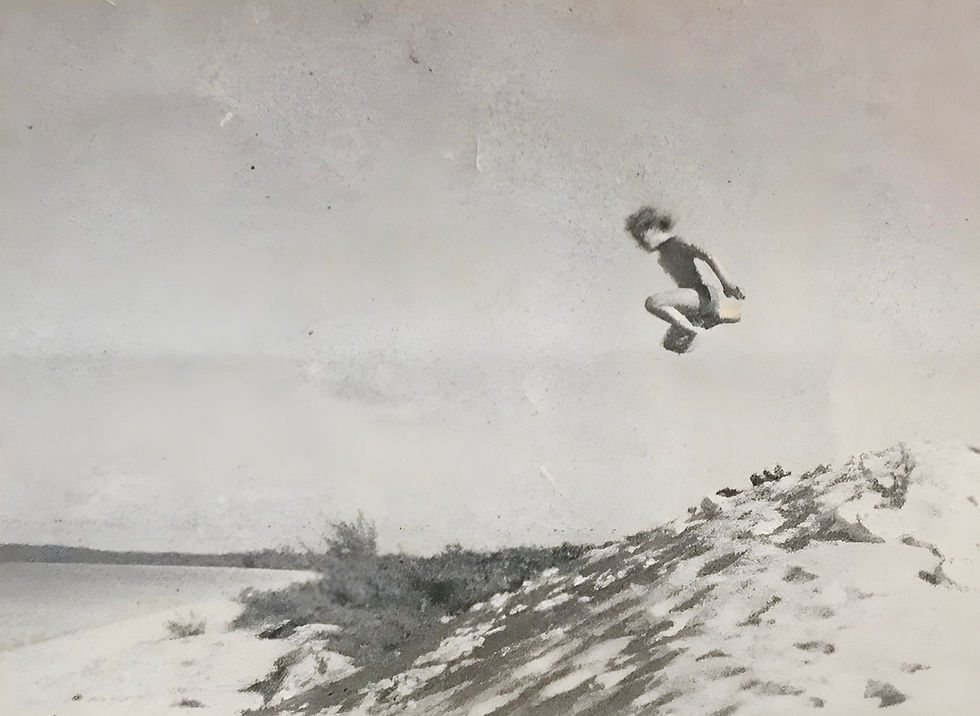
A couple of hours later I went back. There it was on the sand, right where I’d stood to throw it. I couldn’t believe it had crawled all that way. I knew it would die in the hot sun, out of the water, so I picked it up and threw it even farther. It hit the surface with a great splash and sank.
The next morning, the true tulip was back in the same spot by the water's edge. This time, however, the snail inside the beautiful shell was dead.

Later, I learned that the lagoon was cut off from the ocean by a sandbar. A living sea creature, like a true tulip, trapped in a lagoon experiences severe physiological stress and likely dies if the barrier remains closed for long. Because true tulips are slow-moving marine snails adapted to clean, flowing seawater, they typically can't escape the stagnant basin. But this one tried. Twice.

The first time, I’d stood right there, marveling that it had made it all that way. And then I tossed it back, essentially sealing its fate.

My parents and the guests never found out why, or how, the shell went missing from the freezer. Fifty-three years later, I can still see it on the sand and remember how sure I was that the kindest thing I could do was throw it farther.
For more than five decades, I’ve been haunted by the memory of that true tulip lying on the sand dead because of me. I wish I’d paused long enough to wonder why it had come back before I picked it up and threw it out again. I still recognize the boy who ran like hell out of that freezer and I hope I always will.

The lesson I learned from that experience is that there's more to caring than just taking action. Caring is good. Taking action is good. But paying attention to what happens after you care enough to take action is just as important.
***
All photographs by Michael Kennedy (unless otherwise noted) / BlueWolfGallery.com

I’m Michael Kennedy, a resident of Olympic Valley, CA (in photo above with Nicola and Boo). I’m a writer and photographer and I love exploring nature and getting lost along the way. We live in a world that demands our attention and I just want to say thank you for your attention. If you enjoyed this post, please share this with a friend. For more photos and stories visit BlueWolfGallery.com.


Comments